Epoxy Floor Repair in Houston: Peeling, Hot-Tire Lift and Cracks
Peeling, hot-tire lift, cracks or a worn top coat: the likely cause, the fix and the typical cost.
Why Epoxy Lets Go on Houston Slabs — and What a Lasting Repair Looks Like
An epoxy coating can be doomed on the day it goes down. Bush Intercontinental averages 75% relative humidity across the year and about 90% at 6 a.m., with summer dew points near 74°F. Coating makers say to apply only when the slab is at least 5°F above the dew point, and a shaded garage slab on a July morning often isn’t. Coat it anyway and the bond can be weak from the start: fine for a season, then peeling in sheets.
The ground adds a second problem. Much of the area sits on Beaumont Formation clay — the Lake Charles series, in USDA terms — which swells when wet and shrinks when dry, opening soil cracks up to 2 inches wide in a dry spell. A slab on that clay can keep working at an old crack, and a coating laid across a crack that is still moving will split right along it. No coating can fix that, so check a crack for movement before anyone coats over it.
Heat is the third. Bush Intercontinental logs about 111 days a year at 90°F or hotter, and a hot tire parked day after day on a thin or soft top coat can pull it up in patches — hot-tire lift. Water is the fourth: about 51.8 inches of rain a year there, plus wet tires and the occasional flood. A coated floor cleans up easily after water gets in, but it is not waterproofing, and a slab that has sat wet needs a moisture reading before any recoat.
Age matters too. The median home in Pasadena was built in 1977, in Baytown in 1981 and in Galveston in 1973. In older towns like these, a floor job is more often a repair or a resurfacing than a first coat on young concrete.
So a fresh coat rolled over a failed one rarely lasts. Match the fix to the cause: grind lifted areas back to sound concrete, fill cracks that have stopped moving, check moisture where the slab has been wet, and pick a top coat that handles heat and tires. If the coating has let go everywhere, the honest answer is a full grind-off. Repair quotes are free across Greater Houston, including Pasadena, Baytown, Sugar Land and Humble. New floor instead? See epoxy flooring across Greater Houston.
Six Repairs a Houston Floor May Need
From one lifted parking spot to a floor peeled wall to wall, each failure needs its own fix — in a Kingwood garage, a Pasadena shop bay or a Galveston restaurant kitchen alike.
Crack check
Crack Repair on Clay Slabs
A crack that has stopped moving is cleaned out, filled and ground flush before coating. One still opening is a slab question first — no coating will hold it shut.
Hot tire
Hot-Tire Lift Repair
Patches pulled up under parked tires are ground back to sound concrete, rebuilt level and sealed with a top coat meant for tires that roll in hot after a Houston summer drive.
How top coats handle heat →Strip
Full Strip & Recoat
When a coating never bonded, patching only chases the peel around the room. The whole floor comes back to bare concrete and gets a new system from the primer up.
Spot fix
Spot Repairs & Chip Fills
A chipped step-down, a gouge where a jack stand dropped or a worn lane in a shop aisle can usually be patched and blended in without redoing the room.
Refresh
Top-Coat Refresh
If the base coat is sound but traffic lanes have dulled, a light sanding and a new top coat bring back gloss and grip. On a sunny garage apron, ask for a UV-stable top coat.
Epoxy floor care in Houston →Honest call
Repair or Replace?
Sound concrete under a failed coating is usually worth resurfacing rather than replacing. If the slab itself is too far gone, you deserve to hear that straight.
See full pricing guide →How a Proper Repair Goes, Step by Step
Five steps, in the order a Houston floor needs them. We’ll point out which ones yours needs on your free quote.
Read the Failure
InspectStart with where the coating let go: along a crack, under the tires, in sheets, or in a corner that stays damp. The pattern usually points to the cause. Request a free quote.
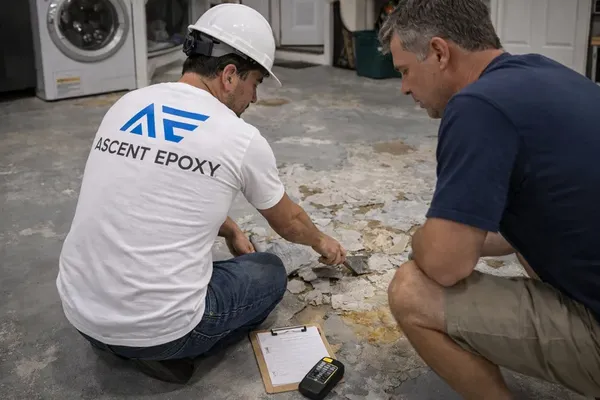
Test Adhesion and Moisture
TestScraping a few spots shows where the old coating still grips. A moisture reading matters on any slab that has had water on it or peels from underneath.
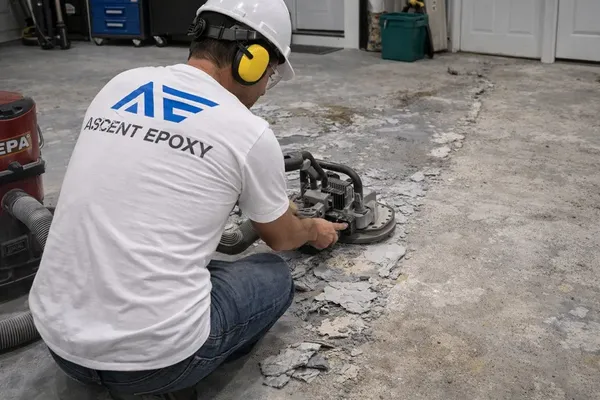
Grind, Fill and Profile
PrepFailed areas come off to bare concrete and the rest is diamond-ground so the new coat can grip. Acid-etching alone rarely leaves enough for a new coat to hold.
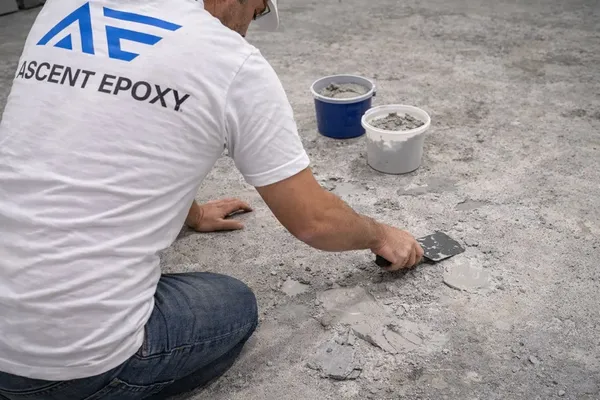
Prime, Rebuild and Top-Coat
CoatPatched areas are built back up level. Where moisture readings call for it, a moisture-mitigation primer goes down first, then a top coat picked for heat and hot tires wherever cars park.
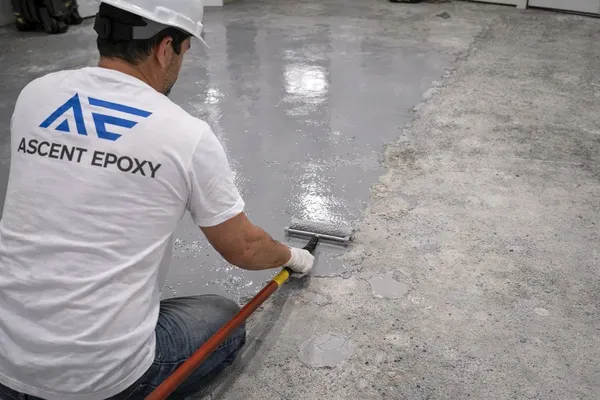
Cure on the Weather’s Terms
CureHumidity and dew point decide the coating day as much as the calendar. On many summer mornings the slab sits too close to the dew point, so waiting for the day to warm up beats forcing the schedule.
Your Repair Quote Is Free.
Free quotes from Kingwood to Galveston.
Repair Work and Finished Floors
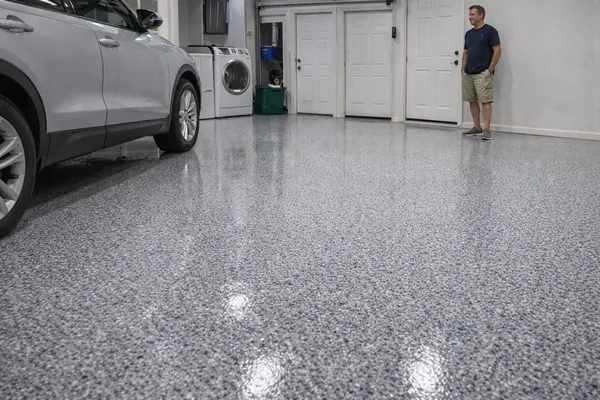
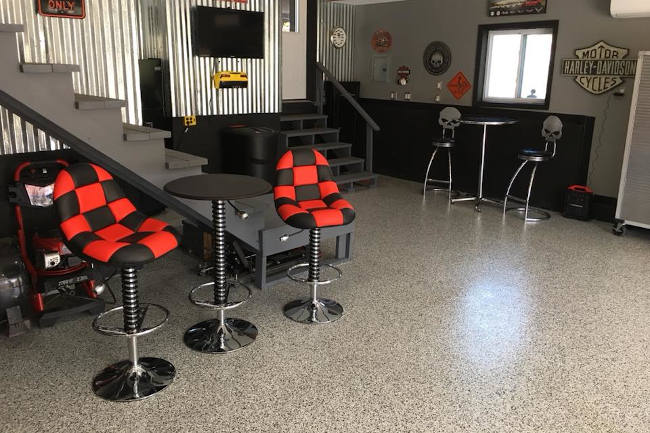
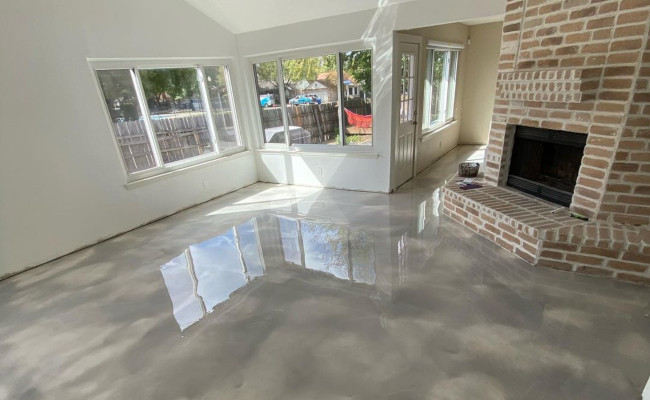
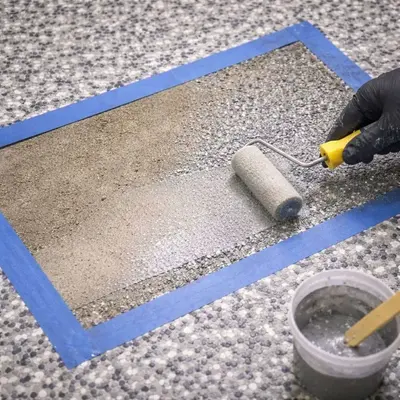
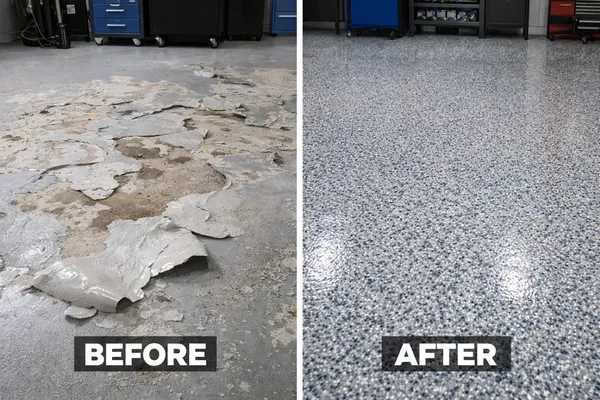
Two finished floors, a spot repair under way and a peeled garage shown before and after its strip and recoat.
What Customers Say on Google
Word-for-word reviews from our Google Business Profile.
"The team was professional, efficient, and did an exceptional job. My garage now looks like a showroom …"
"They installed a new floor in my restaurant, and it looks absolutely stunning. They worked around our schedule, and the end result is beyond my expectations."
"I am so impressed with the quality of work that this company provides. They recently installed a new epoxy floor in my fitness center in Sugar Land, and it looks amazing."
Epoxy Floor Repair Questions from Houston Owners
Straight answers on peeling, cracks, flooding, cost and upkeep for Greater Houston floors.
Usually moisture, or a bond that was weak from the start: a coat rolled onto a damp slab on a humid morning, concrete acid-etched instead of ground, or moisture pushing up from below. Any area peeling from underneath needs a moisture reading before it is repaired.
Only if the old one is still firmly bonded and just worn or dull; then it can be sanded and top-coated. If it is lifting, bubbling or soaked with oil, a new layer inherits the failure, so the old coating has to be ground off to bare concrete first.
Typical Houston-area prices, not a quote: crack patching about $25–$250; resurfacing a badly damaged slab about $3–$7 per sq ft; moisture testing about $50–$300; and a moisture-mitigation primer about $1–$2 per sq ft extra when readings call for one.
A full strip and a new flake floor with a polyaspartic top coat runs about $5–$9 per sq ft (about $2,000–$4,500 for a 2-car garage). Free quotes: (713) 360-0167, any time, or see the Houston pricing guide.
Usually, once the slab has dried and a moisture reading says it’s ready. In Hurricane Harvey, 68% of the Harris County homes that flooded sat outside the 100-year floodplain, so this isn’t only a floodplain question.
A coated floor is easier to clean and disinfect after water gets in, but no epoxy or polyaspartic coating is waterproof, and coating a slab that is still wet starts the next failure.
Only if the crack is still moving. A crack that has stopped can be filled, ground flush and coated over. One that is still opening on Houston’s shrink-swell clay will show through any coating, because a coating doesn’t stop a slab from moving — and you should hear that before anyone quotes you.
Sweep grit often, wash with a mild pH-neutral cleaner, and wipe up oil and pool chemicals before they sit. When traffic lanes look flat, recoat the top layer before the wear reaches the concrete.
Recoating anyway? Try a new color first.
A repair is a good moment to change the look. Pick a size, finish and color, see a sample render, and get a typical Houston-area price range.
Open Floor Studio →