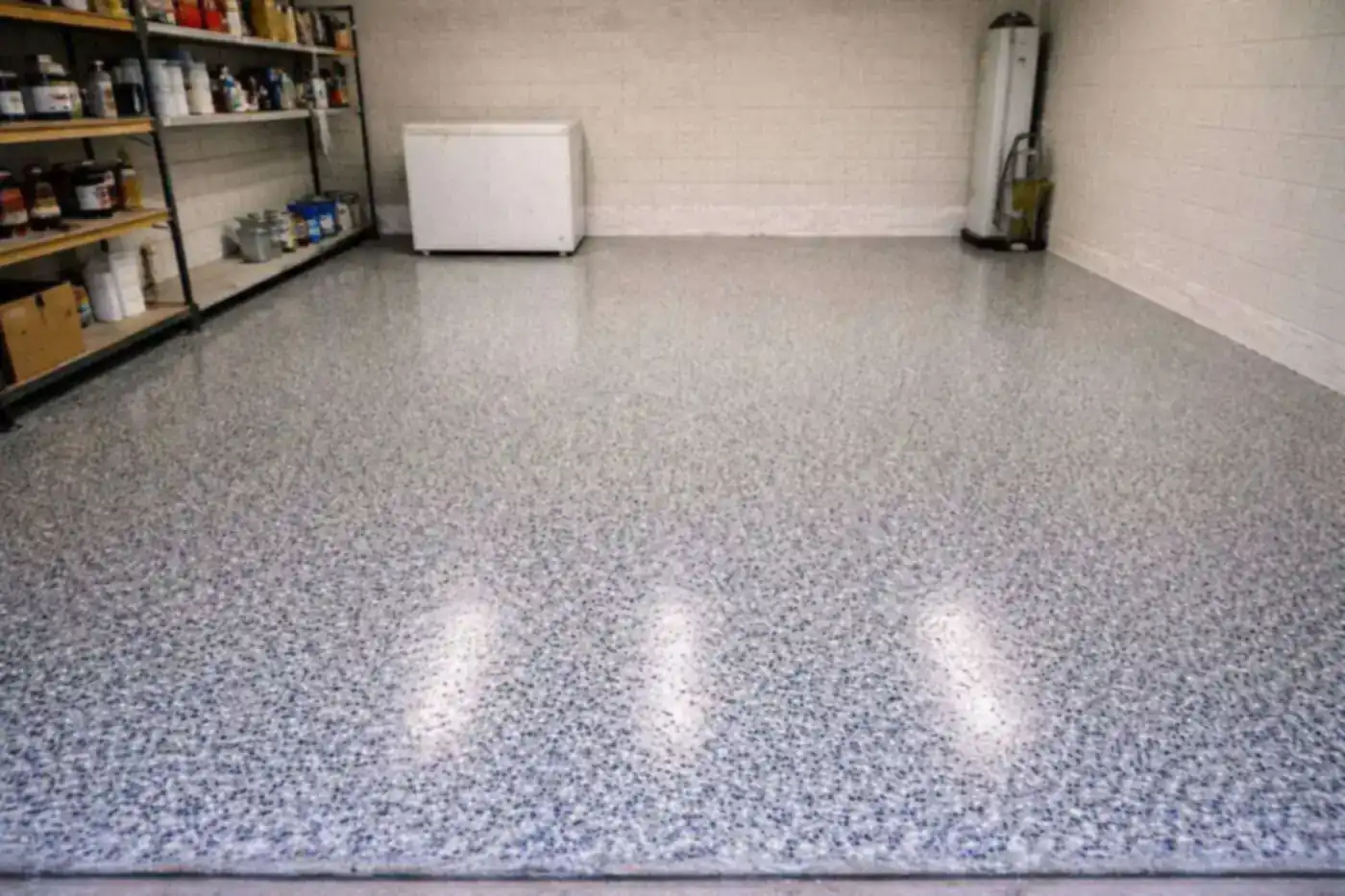
A coated floor asks very little: no grout, no wax, no yearly sealer. It needs grit cleared before it scratches, spills wiped before they set, and a gentle cleaner rather than the strongest bottle under the sink.
Greater Houston adds its own list. Bush Intercontinental Airport averages about 111 days a year at 90°F or hotter and about 52 inches of rain. None of that ruins a well-built floor, but it shapes the routine. The advice below fits a garage floor, a slab-level room at home or a shop or restaurant floor.
The Weekly Routine
Care comes down to four habits. None takes long.
Sweep a few times a week
Loose grit does more harm than anything you'll spill. Sand and dried mud work like sandpaper under shoes and tires, dulling the clear top coat with every pass. A soft push broom or microfiber dust mop clears a two-car garage in minutes, and walk-off mats at each door catch much of it first.
Damp-mop every few weeks
Use warm water with a pH-neutral cleaner, mixed weak, and a well-wrung mop. Relative humidity at Bush Intercontinental averages about 90% at 6 a.m. but nearer 60% by noon, so a floor mopped at dawn dries slowly and stays slick. Mop later in the day, and open the door or run a fan until it's dry.
Hose and squeegee after a messy stretch
The fastest deep clean for a garage is a garden hose and a rubber squeegee: wet the floor, scrub stubborn spots with a soft brush and push the water out the door. Dry the low edges so puddles don't leave spots.
Wipe spills while they're fresh
A sound coating is non-porous, so oil, coolant or soda sits on top instead of soaking in. That buys time, not forever: a spill left to bake on a hot floor can leave a shadow.
What to Keep Off the Coating
The clear top coat is the layer that takes the wear. These shorten its life:
| Avoid | What It Does to the Finish |
|---|---|
| Vinegar and acid-based cleaners | Acid etches the top coat into cloudy, flat patches. Many concrete, tile and rust cleaners are acidic. |
| Strong bleach, ammonia or undiluted degreaser | Full strength can soften or discolor the finish. Dilute, keep contact short, rinse. |
| Steel wool, scouring powder, metal scrapers | They scratch or gouge the top coat, and scratches hold dirt. |
| Soaps that leave a film | Residue builds into a hazy layer that turns slick when wet. |
| A tight pressure-washer jet near edges or cracks | A narrow jet can drive water under a lifted edge and peel the coating back. Use a wide fan tip from a distance, or a hose. |
Short version: nothing acidic, nothing gritty, nothing that leaves a film. Warm water with a few drops of dish soap, rinsed off well, is safe on a healthy coated floor.
Care for Houston's Weather
Three local conditions deserve their own habits: the heat, the rain and the strong sun.
Hot tires in a long hot season
July and August normal highs at Bush Intercontinental sit near 95°F, and 90-degree days run from May into October. After a hot drive, softened tires can grab at a coating, leaving marks or, on a weak top coat, pulling it up. That's hot-tire pickup, and a polyaspartic top coat generally resists it better than plain epoxy.
Rain, mud and clay
Bush Intercontinental records a tenth of an inch of rain or more on about 64 days a year; May, June and October are the wettest months. Much of the area sits on Beaumont Formation clay, which swells when wet and cracks as it dries. It arrives as mud and dries into grit, so hose it off early and sweep more in wet months.
Sun on patios and driveway aprons
Outdoor slabs take strong Gulf Coast sun plus wind-blown grit and pollen. A UV-stable top coat keeps colors from fading or yellowing; plain epoxy isn't made for full sun. Rinse outdoor floors more often than a closed garage.
Floor Looking Tired?
A dull lane, a stain that won't lift or a top coat worn thin: call (713) 360-0167 any time to talk it through, or request a free quote online.
Getting Stains Out
Start with the mildest method and step up only if you must. Test anything stronger in a corner first.
Oil, grease and coolant
Blot the bulk with rags or cat litter, then scrub with warm water, a little dish soap and a soft brush. If a shadow stays, a diluted degreaser labeled safe for coated floors usually lifts it. Rinse well.
Rust, paint and sticker glue
Most rust removers are acidic, so use the smallest amount on the stain only and rinse as soon as it lifts. Lift dried paint or caulk with a plastic scraper; a mild solvent labeled safe for coatings softens stubborn adhesive.
Refreshing the Top Coat
Think of the floor in layers: the prepared slab, the base and color coats, and the clear top coat, which is there to wear so the layers under it don't. Go by condition, not the calendar. The signs: gloss gone flat across the whole floor rather than in one walkway, fine scratches that hold dirt after mopping, or tire lanes worn down toward the color.
A recoat is a much smaller job than a new floor: clean, scuff-sand the old top coat so the new one can grip, repair chips and roll on a compatible top coat. The old coating must be firmly bonded, and the new coat should go down only when the slab is at least 5°F warmer than the dew point. With summer dew points at the airport around 74°F, a careful installer measures first and schedules around it.
When to Call a Pro
Daily care is yours. These signs mean the coating or the slab needs a professional look:
- Peeling or bubbling — coating that lifts at an edge or blisters in the middle rarely stops on its own. Thin prep or moisture rising through the slab are the usual causes.
- A crack coming through — the clay under many Houston slabs swells and shrinks with the seasons, and slabs move with it. A crack that's still moving can come back through any coating, so have it checked for movement before it's patched.
- Worn-through lanes — where base coat or bare concrete shows in the tire paths, a top coat alone may not be enough.
Typical Houston-area prices for this kind of work — not a quote:
| Work | Typical Houston-Area Price |
|---|---|
| Crack patching | About $25–$250 |
| Moisture testing | About $50–$300 |
| Moisture-mitigation primer, when readings call for it | About +$1–$2 per sq ft |
| Resurfacing a badly damaged slab | About $3–$7 per sq ft |
| New flake floor with a polyaspartic top coat | About $5–$9 per sq ft (2-car garage about $2,000–$4,500) |
Slab condition, cracks, moisture and size move every number; the Houston epoxy cost guide has the full breakdown. From Pasadena to Spring to Galveston, call (713) 360-0167 any time to talk your floor through, or try finishes in the Floor Studio.
Frequently Asked Questions
How do I clean an epoxy garage floor in Houston?
Sweep or dust-mop a few times a week to clear grit and dried mud, damp-mop every few weeks with warm water and a pH-neutral cleaner, and hose and squeegee after a messy stretch. On humid mornings, let the floor dry before anyone walks on it.
Can I use vinegar or bleach on an epoxy floor?
Skip the vinegar. It's an acid, and acids etch and cloud the clear top coat over time. Use bleach or ammonia only well diluted, briefly, with a good rinse. For everyday cleaning, a pH-neutral cleaner is enough.
How do I stop hot-tire marks in a Houston garage?
Choose a polyaspartic top coat, which generally resists hot-tire pickup better than plain epoxy, and put a mat under each tire of your daily driver. To clean a mark, let the floor and tires cool, work in a mild cleaner made for coated floors with a soft brush, and rinse. Repeat gently rather than scrubbing hard.
Will a coated garage floor survive a flood?
There's no guarantee. A coating doesn't waterproof a garage, but it cleans up far more easily than bare concrete. Flooding here isn't limited to mapped flood zones: in Harvey, 68% of the Harris County homes that flooded were outside the 100-year floodplain. Afterward, squeegee out the water, wash off the silt, let the slab dry and have its moisture tested before any recoat.
Why did a crack show up through my epoxy floor?
Much of Greater Houston sits on clay that swells when wet and shrinks as it dries, and slabs move with it. A crack that is still moving can come back through any coating. A coating can cover a stable crack, but it won't stop a slab from moving or fix a foundation.
Related Articles
How Long Does an Epoxy Floor Last in Houston?
What stretches or shortens a floor's life in Houston heat, humidity and clay.
Why Epoxy Floors Fail in Houston (and How to Avoid It)
The prep, moisture and product mistakes behind peeling floors, and what to ask before you hire.
How Much Does Epoxy Flooring Cost in Houston?
Typical Houston-area prices by system and garage size, and what moves them.