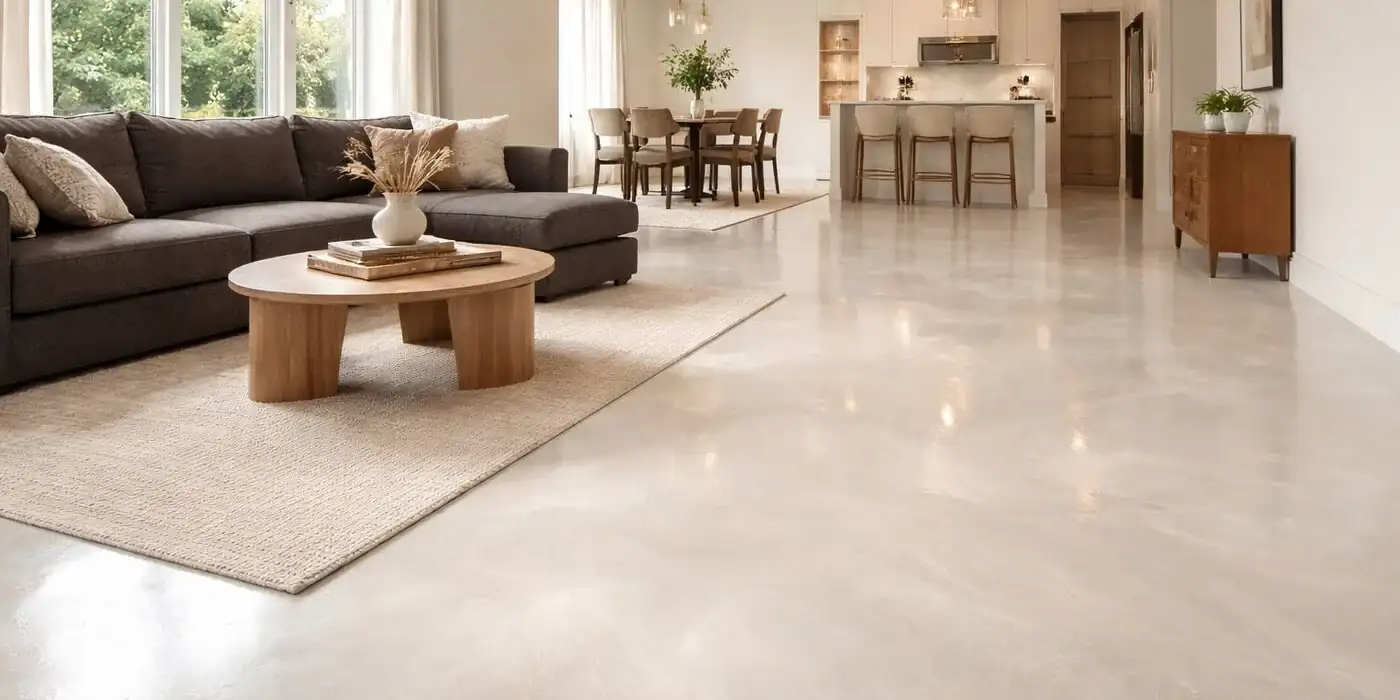
The short answer: Most 2-car garages in Greater Houston come in at about $2,000 to $4,500 for a flake floor with a polyaspartic top coat, roughly $5 to $9 per square foot. Cracks, moisture, an old coating and slab size move the final number. These are typical Houston-area prices to help you plan — not a quote.
Garage floor prices are easier to find in Houston than you might expect: a handful of local installers post them online, and national cost guides publish ranges too. The figures rarely line up, though, because some quote a flat 2-car price, some charge by the foot and some list a starting price plus add-ons.
This guide lines them up for garage floors, slab interiors and patios and commercial spaces from Sugar Land and Cypress out to Baytown and Galveston, and explains the local conditions that nudge an estimate up or down.
Typical Houston-Area Prices by Coating System
| Coating System | Typical Cost per Sq Ft | Typical 2-Car Garage (400–500 sq ft) | Where It Fits |
|---|---|---|---|
| Grind & seal | about $2.50 – $4 | about $1,000 – $2,000 | Dust control, a clean basic finish |
| Solid-color epoxy | about $3 – $6 | about $1,200 – $3,000 | Workshops, storage rooms, utility floors |
| Flake (chip) + polyaspartic top coat | about $5 – $9 | about $2,000 – $4,500 | Most home garages in the area |
| Metallic epoxy | about $6 – $12 | about $2,400 – $6,000 | Showpiece garages, slab interiors, retail |
| Quartz broadcast | from about $10 in Houston | — (mostly commercial) | Restrooms, kitchens, wet commercial rooms |
| Urethane cement | about $8 – $15 | — (commercial) | Commercial kitchens, washdown and food areas |
Choose a garage size, a finish and your colors, and the Floor Studio shows a typical price range for that combination.
Open Floor Studio →What those ranges assume: a fair slab that is diamond-ground, crack-filled and given a full system, not one coat of paint. A price far under the low end usually means a step is missing or the product is thinner. Ask which.
What Pushes a Houston Quote Up or Down
1. Clay Soil and Cracked Slabs
Much of the area sits on Beaumont Formation clay (the Lake Charles soil series), which swells when wet and cracks as it dries, so garage slabs here often carry cracks. Filling small ones is normal prep; patching larger damage runs about $25 to $250, and resurfacing a worn-out slab about $3 to $7 per square foot. No coating holds a moving slab still, so have an active crack checked first.
2. The Age of Your Slab
In Fort Bend and Montgomery counties the median home was built around 2006. Out in the Cypress ZIP code 77433, the large majority of homes went up in 2000 or later. Young slabs are usually sound but may carry a curing compound that has to be ground off. Older cities differ: Pasadena’s median home dates from 1977 and Galveston’s from 1973, and an older slab is likelier to need a worn coating stripped.
3. Humidity and Moisture in the Concrete
At Bush Intercontinental Airport, humidity averages about 90% at 6 a.m. and summer dew points sit near 74°F. Coating makers say to apply only when the slab is at least 5°F above the dew point, so muggy mornings shift the schedule. Moisture rising through the slab is what changes the price: a test runs about $50 to $300, and high readings usually add a moisture-mitigating primer at about $1 to $2 per square foot.
4. Heat and Sun
Bush Intercontinental averages about 111 days a year at 90°F or higher. Hot tires can soften and lift a weak coating, and plain epoxy tends to yellow in strong Gulf Coast sun. That is one reason the garage systems local installers advertise typically finish with a polyaspartic top coat. On a flake floor, that top coat is already inside the typical price above.
Want a Price for Your Own Floor?
Call any time for a free quote, or send your details online.
Typical Prices by Project
Home Garages
- 1-car garage (about 200–300 sq ft): about $1,000 – $2,700
- 2-car garage (about 400–500 sq ft): about $2,000 – $4,500
- 3-car garage (about 600–800 sq ft): about $3,000 – $7,000
These are flake-and-polyaspartic figures.
Slab Interiors and Patios
Solid-color epoxy runs about $3 to $6 per square foot and metallic about $6 to $12, so a 500 sq ft room ranges from roughly $1,500 to $6,000. It needs a concrete slab, though: most homes in the Houston Heights, for example, sit on pier-and-beam foundations with wood floors over a crawl space. For a patio or pool deck, ask for a separate price: outdoors the finish needs a UV-stable top coat, and next to a pool a slip-resistant texture as well.
Commercial Spaces
- Typical overall range: about $4 – $12 per sq ft
- Grind & seal from about $3.50 per sq ft; urethane cement about $8 – $15
- Cove base up the wall: about $12 – $14 per linear foot
Kitchens also have a rule to meet. Texas adopts the FDA Food Code, which requires food-area floors that are smooth, durable, easily cleanable, and nonabsorbent where wet. Inside the City of Houston the Houston Health Department issues food permits; in unincorporated Harris County and cities such as Humble, Harris County Public Health does.
What a Complete Quote Should Cover
- The slab’s condition, including cracks that may still be moving
- A moisture reading, especially where water has come in
- Diamond grinding (acid etching alone rarely gives enough grip)
- Crack and hole filling, plus a moisture-mitigating primer if needed
- Base coat, decorative layer and a UV-stable top coat
- When you can walk on it and when you can park on it
Often priced separately: removing an old coating, resurfacing, moisture mitigation, cove base and footage beyond a package size.
Red flags: no mention of prep, a price far below the typical range for the system named, just “epoxy” with no product named, no moisture reading on a slab that has flooded, or full payment demanded before work begins.
DIY Kit or Hired Installer? Where the Money Goes
| DIY Kit | Professional System | |
|---|---|---|
| Surface prep | Clean and etch | Diamond grinding |
| Moisture check | Usually skipped | A reading before coating |
| Timing | Whatever weekend you’re free | A day when the slab is at least 5°F above the dew point |
| Top coat | Often none | UV-stable polyaspartic |
| Typical 2-car cost | Much less up front, plus your own labor | About $2,000 – $4,500 |
The gap shows fastest in summer, when a floor with no top coat takes tires straight off hot pavement. If you go DIY, grind rather than etch, test for moisture, and wait for a cooler, drier stretch.
How to Get an Accurate Price in Houston
Have three things ready: the square footage (length times width), the slab’s condition (cracks, stains, old coatings, past water) and the finish you want, which the Floor Studio can help you pick. Then call (713) 360-0167 — answered around the clock — or request a free quote online.
Frequently Asked Questions
What is the typical cost of epoxy coating a garage floor in Houston?
A 2-car garage with a flake floor and polyaspartic top coat typically costs about $2,000 to $4,500 in the Houston area, roughly $5 to $9 per square foot. A 1-car runs about $1,000 to $2,700 and a 3-car about $3,000 to $7,000. These are typical area prices, not a quote.
Why are some Houston epoxy quotes so much cheaper?
Usually they don’t cover the same work. A low number may leave out grinding, crack repair, a moisture check or the top coat, or be a starting price for a set size with repairs extra. Compare quotes line by line.
Does Houston’s clay soil affect the cost of an epoxy floor?
It can. Slabs on the area’s swelling clay often need cracks filled first, and bigger patches run about $25 to $250. A coating won’t stop a slab that is still moving.
Does humidity or moisture add to the price?
Humidity mostly shifts the install day. Moisture inside the slab changes the price: a test runs about $50 to $300, and a moisture-mitigating primer about $1 to $2 per square foot.
How much does a commercial epoxy floor cost in Houston?
It depends on the system. Commercial floors typically run about $4 to $12 per square foot; urethane cement for kitchens runs about $8 to $15.
Do you charge for a quote?
No. Quotes are free. Call (713) 360-0167 at any hour or use the online form, with your square footage and a few notes about the slab.