Garage Floor Epoxy in Houston for Clay Slabs, Heat & Humidity
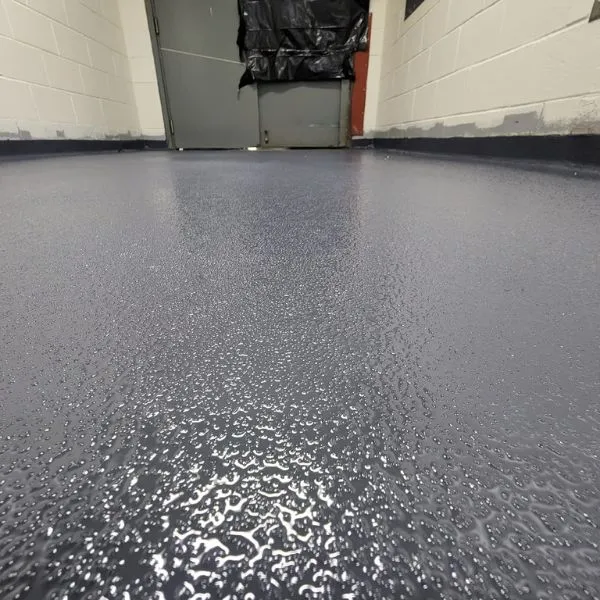
A flake floor under a polyaspartic top coat, prepped for Houston clay, heat and humidity.
What a Houston Garage Slab Is Up Against
A new garage slab is bare concrete: porous, dusty and quick to stain. Oil, brake fluid and tire marks soak in, and the gray grit never quite sweeps up. An epoxy coating turns it into a sealed floor you can clean. In Greater Houston, three local conditions decide whether that coating lasts: the clay under the slab, the heat, and the humidity on install day.
Start with the ground. Much of the Houston area sits on Beaumont Formation clay (the Lake Charles soil series) that swells when wet and shrinks as it dries. A slab can shift a little as that clay moves, which makes garage-floor cracks a real local topic. A good installer checks each crack for movement and tells you plainly when one is active: a coating covers a dormant crack, but it won’t hold a shifting slab still.
Then the heat, with roughly four months of nights that never drop below 70°F. Tires rolling in off hot pavement can soften a thin roll-on kit and peel it up, the failure called hot-tire pickup. A flake broadcast under a polyaspartic top coat is made for that load and keeps its color in strong Gulf Coast sun. Similar systems are used on interior slab floors.
Humidity decides the install day. Mean relative humidity at Bush Intercontinental is about 75%, early mornings average 90%, and summer dew points sit near 74°F. Coating makers say to apply only when the slab is at least 5°F above the dew point, so a careful installer measures before mixing anything. Typical costs are in our Houston pricing guide.
Slabs differ from town to town. Most homes in the Cypress area were built in 2000 or later, while Sugar Land did most of its building in the 1980s and 1990s. Half the homes in Pasadena, TX date from 1950 to 1979, and in the city of Galveston one home in five predates 1940, so older slabs there may need repair before color. Kingwood, a planned community now inside the City of Houston, and Humble, TX sit to the northeast; Missouri City, TX, Spring, TX and Baytown mix older and newer slabs. Coating a shop or service bay instead? See commercial floors.
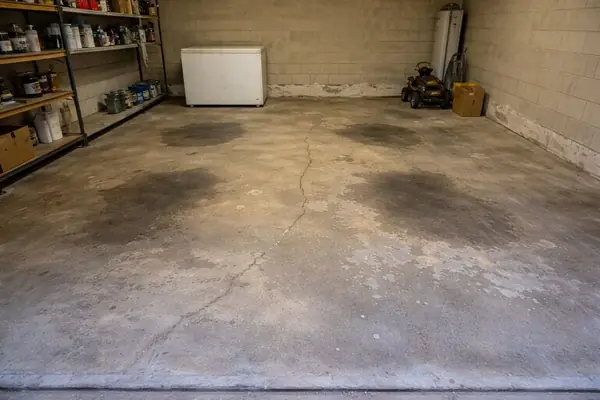 Before
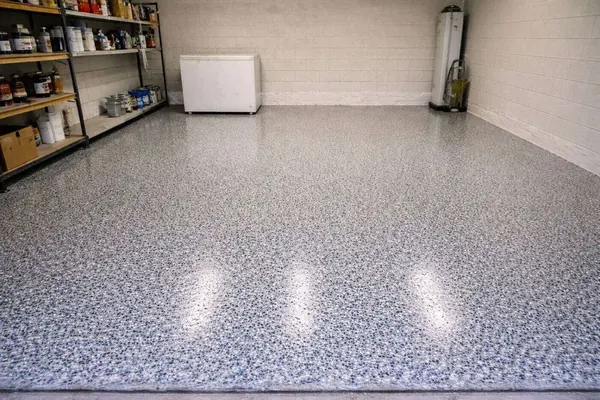 After
After
Six Things a Coated Garage Floor Does Here
What changes when a stained, dusty slab becomes a sealed flake or metallic floor you’ll want to leave the door open for.
Stays put
Built for Hot Tires
Bush Intercontinental averages about 111 days a year at 90°F or more. Warm tires can lift a cheap kit; a polyaspartic top coat over flake is made to stay bonded when you park.
Epoxy vs. polyaspartic in the heat →Sealed
Spills Stay on Top
Oil drips, transmission fluid and brake dust sit on a sealed surface until you wipe them up, instead of soaking into open concrete as a permanent stain.
Grip
Better Footing When It’s Wet
Bush Intercontinental gets about 51.8 inches of rain a year, and what you drive in on ends up on the floor. Flake plus a grit additive in the top coat gives shoes something to hold.
Smooth
Cracks Handled First
Houston-area clay can open soil cracks up to 2 inches wide in a dry spell. Checking each slab crack for movement and filling the dormant ones before color keeps hairlines out of the finish.
Why coatings fail here →Mop
Simple Weekly Care
Pollen, yard grit and mud sit on a seamless surface with no pores to sink into. A dust mop, then a damp mop with a mild cleaner, is the whole routine.
$5–$9
Prices You Can Plan Around
Typical Houston-area prices for flake under a polyaspartic top coat run about $5–$9 per sq ft, roughly $2,000–$4,500 for a 2-car garage. Area ranges to plan with, not a quote.
See full pricing guide →Five Steps a Houston Garage Floor Needs
Moisture in the slab and untreated cracks can undo a garage coating. We’ll walk you through each step on your free quote.
Free Quote
No costCall (713) 360-0167 any time or use the form. Tell us the garage size, how you use it, and what’s on the slab: cracks, oil stains, a flaking old coating. Ask for a written quote that names the prep, not just the color. Request yours free.
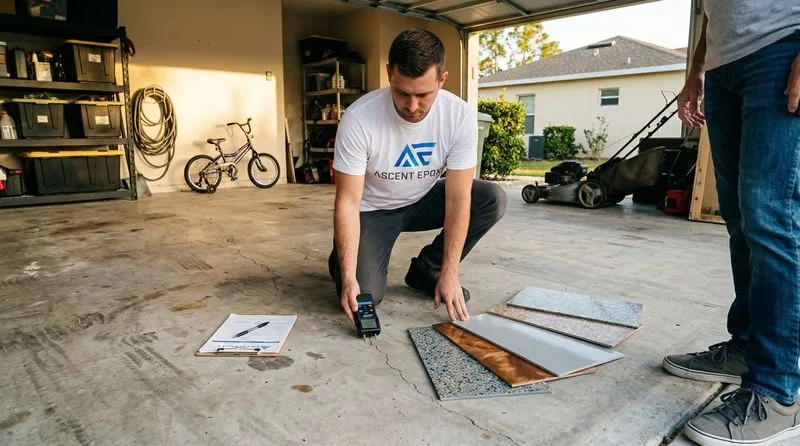
Surface Preparation
Grind, don’t etchDiamond grinding opens the smooth top of the slab so the coating locks in instead of resting on it. Then a moisture test, since a slab can hold more moisture than a coating tolerates, and one that has flooded before needs checking.
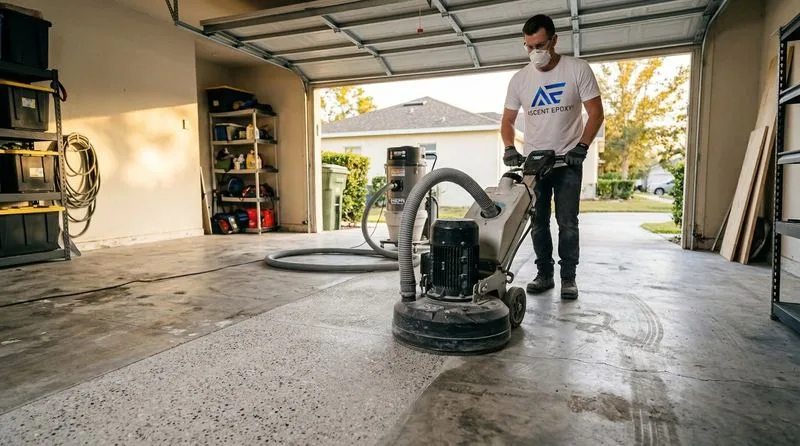
Crack & Joint Repair
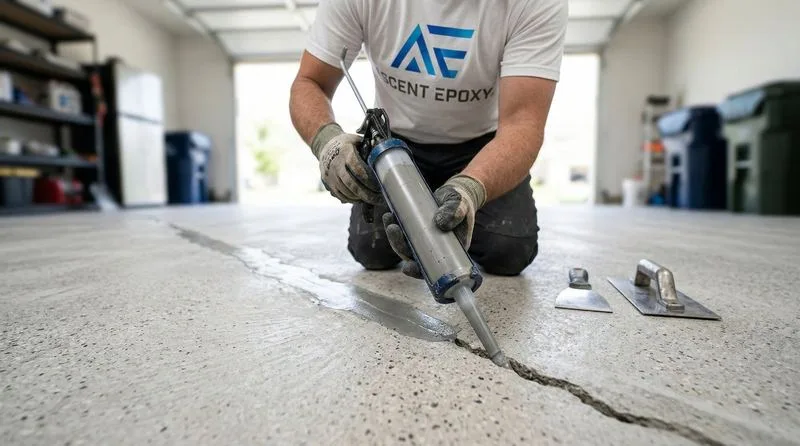
Clay checkEach crack is checked for movement. Dormant cracks and spalls are filled flush and joints cleaned and filled. Patching usually runs about $25–$250; a badly worn slab may need resurfacing at about $3–$7 per sq ft. A crack that’s still moving should be named in the quote.
Multi-Coat Application
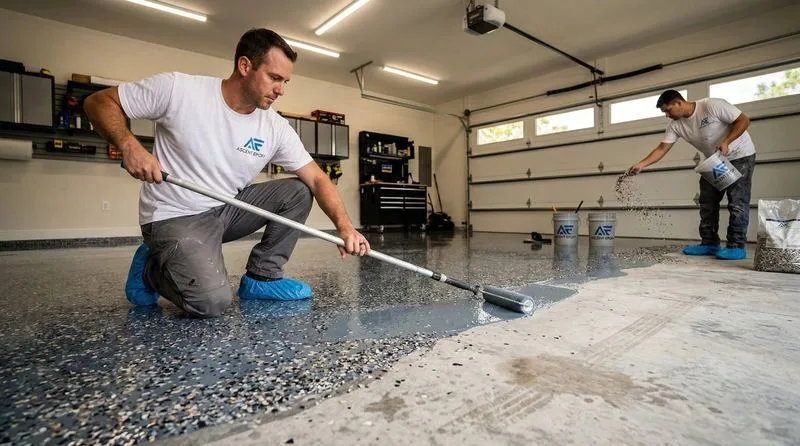
Dew point firstIf the test calls for it, a moisture-mitigation primer goes first (about $1–$2 more per sq ft), then the epoxy body coat with your flake or metallic, then a UV-stable polyaspartic top coat, each applied while the slab stays at least 5°F above the dew point.
Cure & Enjoy
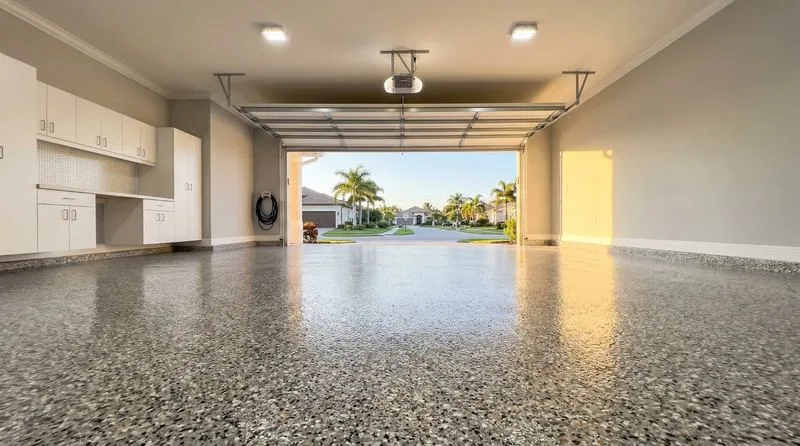
Ask for the timesCure times depend on the product and the weather, from walking on the floor within hours to waiting several days to park. Get the cure times for your system in writing.
It Starts With a Free Quote.
Call any time or send the form. Tell us about the garage, the cracks and the finish you like, with no obligation.
Garage Finishes to Compare
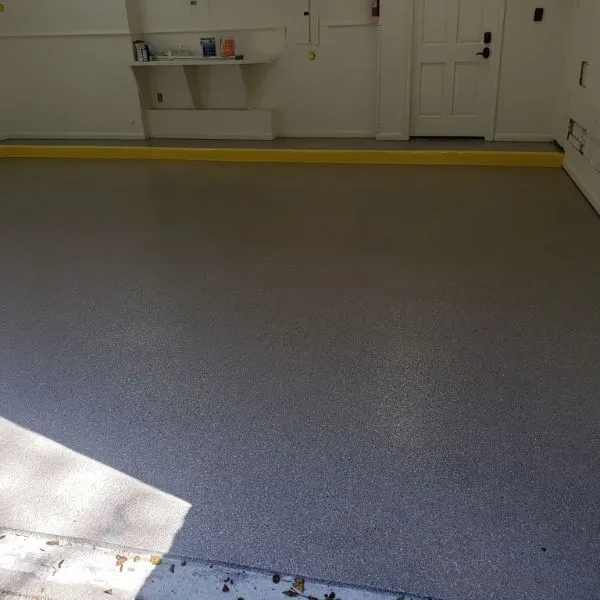
Example garage floor finishes, plus before-and-after shots.
What Garage Owners Say on Google
Three of the 15 reviews on our Google profile, in the reviewers’ own words.
“The team was professional, efficient, and did an exceptional job. My garage now looks like a showroom, and I have received countless compliments from my neighbors in the Bellaire…”
“… The team was cordial and did a good job working together. My garage floor seems like new again, and I'm really happy with the outcome. …”
“We have a beautiful garage. Excellent Support.”
Garage Epoxy FAQs — Houston
Straight answers to what Greater Houston homeowners ask before they coat a garage floor.
Typical Houston-area prices, not a quote: flake with a polyaspartic top coat runs about $5–$9 per square foot, or roughly $1,000–$2,700 for a 1-car garage, $2,000–$4,500 for a 2-car and $3,000–$7,000 for a 3-car. Solid-color epoxy is about $3–$6 per square foot and metallic about $6–$12. Crack patching (about $25–$250), moisture testing (about $50–$300) and a moisture-mitigation primer (about $1–$2 more per square foot) can add to it. Details are in our Houston pricing guide.
Usually the two work together. Epoxy builds a thick, well-bonded body coat that carries the flake or metallic; a polyaspartic top coat adds UV stability and hot-tire resistance. Polyaspartic is a type of polyurea, so you’ll see both names. Epoxy with no UV-stable top can yellow in sunlight. More in epoxy vs. polyaspartic.
It decides when coating can happen. Coating makers want the slab at least 5°F above the dew point, and on a muggy Houston morning it often isn’t, so a careful installer measures on the day and moisture-tests first.
Houston-area clay swells when wet and shrinks when dry, and a slab can move a little with it. A coating doesn’t stop that. Good prep fills dormant cracks so they don’t show through, and flags active ones before you pay for a finish.
A coating doesn’t waterproof a garage or protect it from flooding. It makes cleanup easier: a sealed floor can be squeegeed, washed and disinfected, where bare concrete soaks water up. If floodwater has sat on the slab in the past, have it moisture-tested before coating.
We cover 10 places: Houston, Sugar Land, Cypress, Spring, Humble, Kingwood, Missouri City, Pasadena, Baytown and Galveston. Kingwood is part of the City of Houston; Spring and Cypress are unincorporated. See our service areas or call (713) 360-0167 any time.
Try garage floor colors before you call.
Pick a size, a finish and a color, see a sample render, and compare it with typical Houston-area prices.
Open Floor Studio →