Epoxy Flooring Services in Houston
Garage, home, commercial and industrial floors, plus floor repair, planned for Houston clay and humidity.
Google Rating 15
Google Reviews 10
Greater Houston Places 24/7
Calls Answered
Six Services, One Gulf Coast Slab
Much of Greater Houston's concrete sits on clay that swells after a downpour and shrinks in a dry spell. Start with the epoxy floor you need.
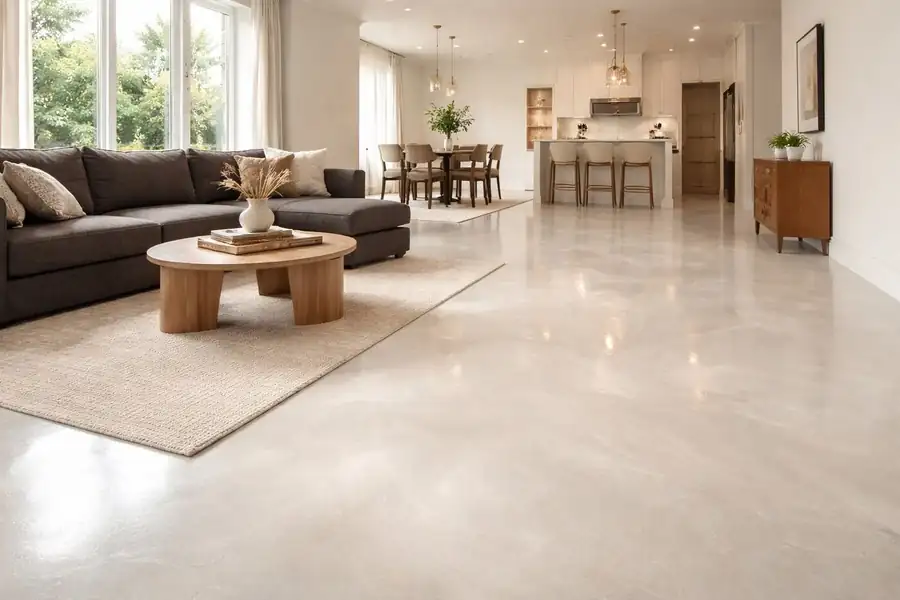
Residential Epoxy Flooring
Most newer homes around Houston are built slab-on-grade, which puts kitchens, laundry rooms, flex rooms and patios in play for a coated floor. Many older pier-and-beam houses inside the Loop have wood living floors instead, and a resin coating is for concrete.
- Flake, metallic and solid-color finishes
- A seamless surface that mops clean
- UV-stable top coats for sunny patios
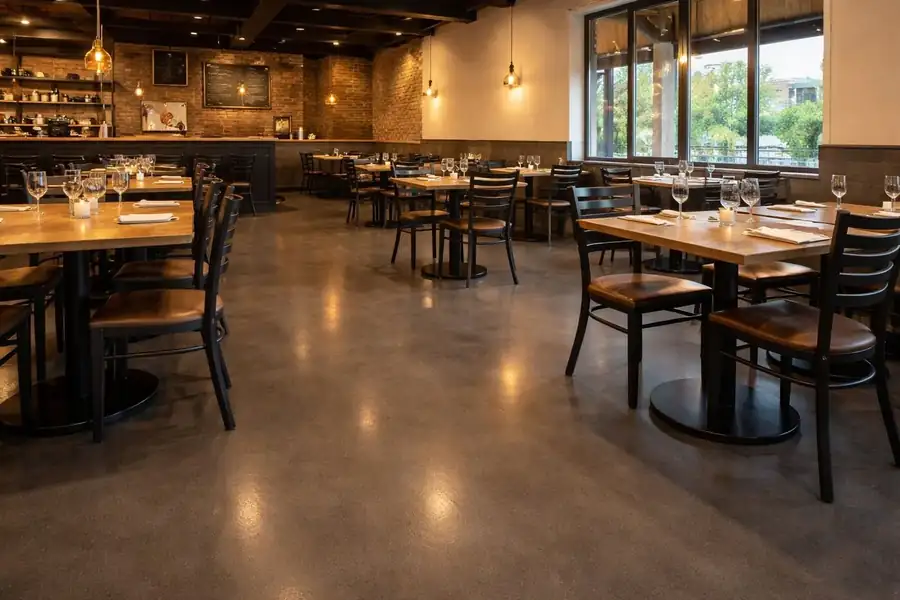
Commercial Epoxy Flooring
Restaurants, gyms, shops and clinics need floors that clean up fast between rushes. For food businesses, the FDA Food Code that Texas follows asks for indoor floors that are “smooth, durable, and easily cleanable,” and nonabsorbent in wet areas.
- Slip-resistant textures for wet entries
- Urethane cement for kitchens and wash-down
- Logos, colors and striping for branded spaces
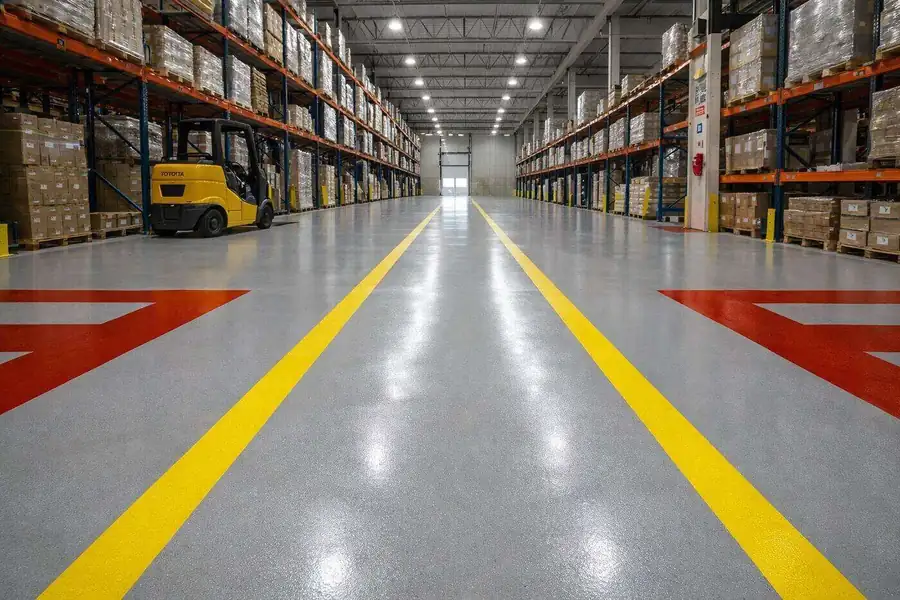
Industrial Epoxy Flooring
Warehouses and service bays along Beltway 8, US 290, I-45 and the Grand Parkway take forklift traffic, pallet jacks and spills every shift. Floors like that call for chemical- and abrasion-resistant systems, not a thin garage coat.
- Chemical, impact and abrasion resistance
- Safety striping and anti-slip broadcasts
- High-build and mortar systems for heavy use
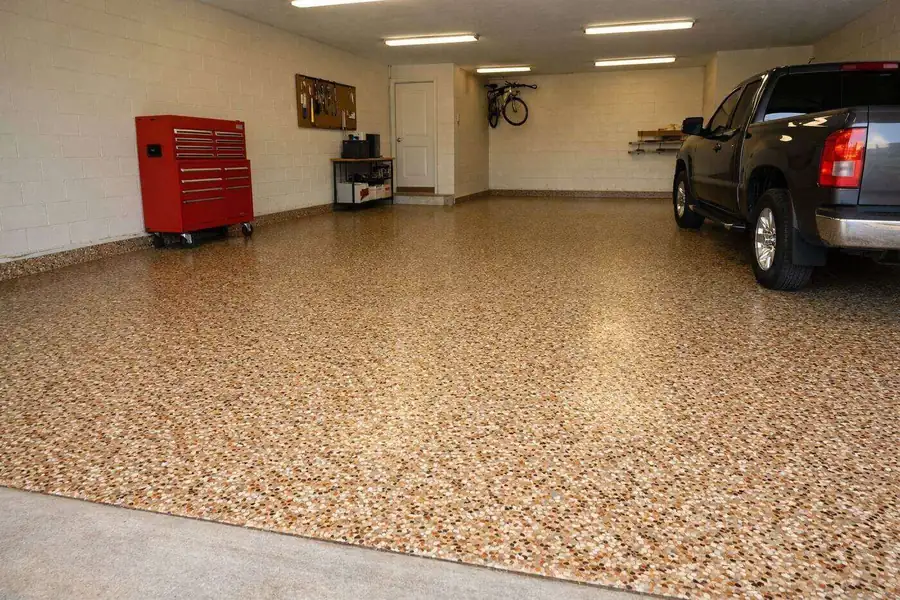
Garage Epoxy Flooring
In a region built on slabs, the garage is the natural place to start. Bush Intercontinental logs roughly 111 days of 90-degree heat a year, so tires come home hot, and a flake broadcast under a polyaspartic top coat is the usual answer. Typical 2-car range: about $2,000–$4,500.
- Top coats that resist hot-tire pickup
- Crack filling and grinding as part of prep
- Flake, metallic and quartz options
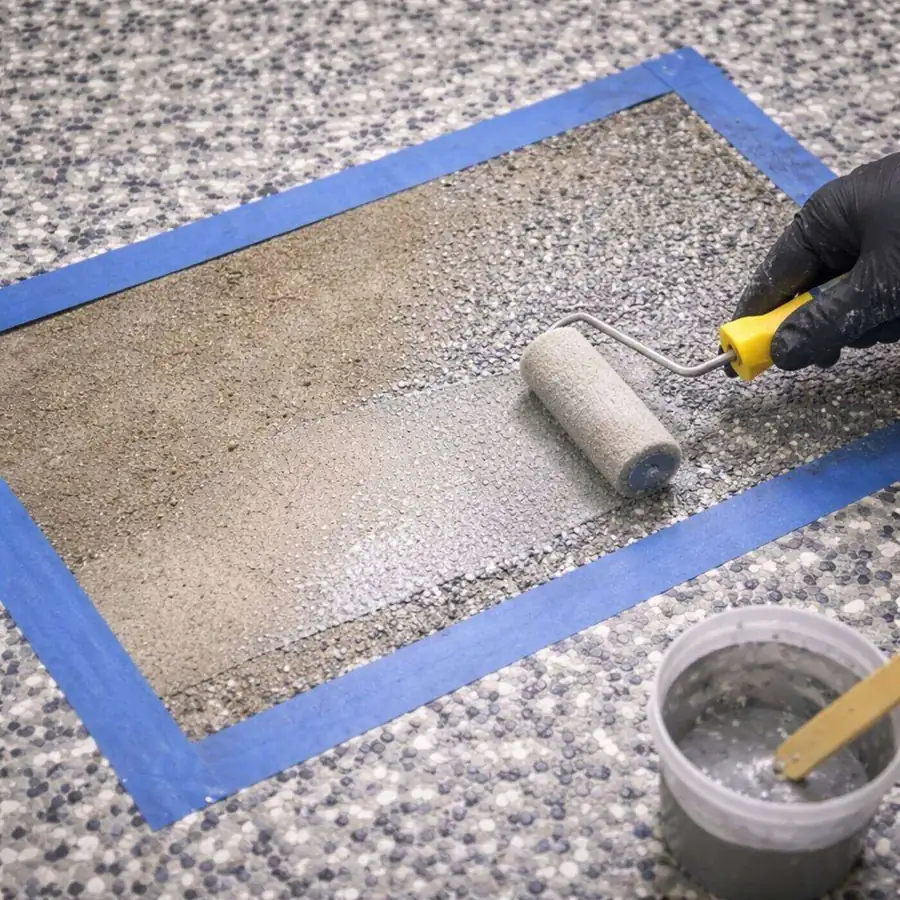
Epoxy Repair & Maintenance
Most peeling floors failed at the bond, not the resin: a slab that was etched instead of ground, moisture nobody measured, or a crack still moving in the clay. The fix starts with finding which one it was, then patching, re-bonding or recoating.
- Peeling, bubbling and worn top coats
- Crack patching, typically about $25–$250
- Recoats over sound, well-bonded coatings
What a Gulf Coast Floor Actually Requires
How the slab, the clay and the weather are handled matters more than the resin brand.
The Slab Gets Read First
A moisture reading and a diamond-ground profile decide whether a coating grips or peels, and the dew point decides the hour. On clay that moves, it's also the moment to catch a live crack.
Numbers You See Up Front
Our pricing guide lists typical Houston-area ranges by project, so you can size up a budget before calling. They're planning figures, not a quote.
Calls Answered Around the Clock
Ring (713) 360-0167 at any hour, weekends included, and the call gets answered. The office keeps Monday to Friday, 8 a.m. to 6 p.m.